Leave Your Message

Top 10 Ice Cream Transport Vehicles for Global Buyers?

Choosing an Ice Cream Transport Vehicle is a cold-chain decision, not simply a vehicle purchase. Global buyers must examine insulation, refrigeration capacity, payload, route length, and service access. A polished exterior means little if the cargo warms during a long customs delay.

Dr. Judith Evans, a refrigeration and cold-chain engineering researcher, states, “The cold chain is only as strong as its weakest link.” Her principle fits ice cream transport perfectly. A reliable Ice Cream Transport Vehicle should protect products from factory loading to the final freezer. Look for stable temperature monitoring, insulated doors, easy-clean cargo floors, and alarms that reveal problems early. Small details matter. Door seals can fail. Sensors can drift. Operators can forget.

This Top 10 guide compares vehicles for different operating realities. It considers compact vans for urban delivery, refrigerated trucks for regional distribution, and larger bodies for international supply networks. Each option involves compromises. More insulation may reduce payload. Larger refrigeration units may increase fuel use. Electric models can lower local emissions, yet charging infrastructure remains uneven across markets.

The ranking also considers practical ownership factors. These include maintenance coverage, spare-part availability, driver visibility, loading height, and total operating cost. Specifications alone cannot predict performance. Weather, traffic, handling habits, and delivery frequency all influence results.

That is the imperfect part. No single Ice Cream Transport Vehicle suits every buyer. The best choice matches product volume, climate, route distance, and service capability. This guide helps global purchasers make that match with clearer evidence and fewer expensive surprises.
Top 10 Ice Cream Transport Vehicles for Global Buyers?

Defining the Top 10 Ice Cream Vehicles by Payload, Volume, and −18°C Control

Top 10 Ice Cream Transport Vehicles for Global Buyers?

The best ice cream vehicle is not simply the largest one. Global buyers should compare payload, usable volume, and verified −18°C control. A compact insulated van may carry 500 kilograms, while a large rigid truck can exceed several tonnes. However, extra volume means little if the refrigeration system struggles during frequent door openings.

The ten useful configurations include compact vans, long-wheelbase vans, insulated pickups, small box trucks, medium box trucks, large rigid trucks, refrigerated trailers, multi-temperature trucks, urban electric vans, and container chassis. Each option serves a different route pattern. A dense city needs maneuverability and fast recovery. A regional distributor needs payload, pallet access, and longer holding time.

In field checks, I would measure product temperature at the rear, beside the doors, and near the evaporator. One reading is not enough. Uneven cooling is easily missed.

Tips: Ask for temperature logs from loaded trials, not empty-vehicle demonstrations. Check payload after insulation, shelving, batteries, and refrigeration equipment are installed. Confirm door seals, alarm settings, defrost cycles, and service support in the destination market. −18°C is the target, but real routes are messy. A vehicle may perform well in a warehouse and disappoint on a hot, crowded street. Buyers should leave a safety margin. Even careful specifications can prove optimistic.

Applying Codex’s −18°C Frozen-Food Benchmark to Global Vehicle Selection

Top 10 Ice Cream Transport Vehicles for Global Buyers

Codex sets −18°C or colder as the key benchmark for quick-frozen foods. This temperature should guide every ice cream vehicle comparison. The target applies to the product, not merely the cargo compartment. Buyers should request mapped temperature data, calibrated sensors, and records from loading to delivery. A cold-looking body proves little.

The FAO’s 2019 report estimated that 14% of food is lost between harvest and retail. Ice cream faces sharper risks during loading, traffic delays, and repeated door openings. The best vehicle therefore combines strong insulation, stable refrigeration, rapid pull-down, and clear alarm history. Smaller urban vehicles may need better access control. Larger trailers need dependable airflow around stacked cartons. Choose evidence over impressive specifications.

The Global Cold Chain Alliance reported approximately 719 million cubic metres of global cold-storage capacity in 2022. That capacity does not guarantee safe transport. Vehicle selection should also consider route length, ambient heat, payload density, cleaning access, and backup power. A model tested in a cool warehouse may struggle on a humid afternoon. This is where buyers must remain cautious. Perfect specifications can still fail in real traffic. Run a loaded trial, review temperature graphs, and inspect the warmest package location before approving any vehicle.

Comparing ATP-Compliant Vans, Trucks, Trailers, and Containers for Export

Selecting among the top 10 ice cream transport vehicles requires more than comparing cargo volume. ATP certification matters for international movement, but certification alone does not guarantee product quality. An insulated van suits urban deliveries and small export batches. A multi-temperature van adds flexibility, though its partitions reduce usable space. Rigid refrigerated trucks offer better pallet capacity. Multi-temperature rigid trucks handle mixed frozen and chilled loads. Reefer trailers support high-volume distribution. Check the ATP certificate, insulation class, and operating range.

Swap bodies can transfer between road and rail with fewer handling steps. Twenty-foot reefer containers suit smaller maritime shipments. Forty-foot containers reduce unit freight costs but increase exposure during loading. Generator-equipped containers improve independence at terminals. Eutectic-plate vehicles may control short routes without continuous engine operation. However, they need disciplined pre-freezing. Power matters. The International Institute of Refrigeration stresses that stable refrigeration supports food quality and reduces cold-chain losses.

The UNEP and FAO Sustainable Food Cold Chains report estimates that stronger cold chains could prevent about 144 million tonnes of food loss annually in developing countries. For ice cream, buyers should specify a continuous product temperature near -18°C or colder, based on cargo requirements and local procedures. Install calibrated data loggers near doors and the warmest pallet zone. Inspect door seals, evaporator airflow, and backup power before loading. A neat ranking can mislead. A large trailer may be inefficient for a half-empty shipment, while a smaller ATP-compliant vehicle may protect quality better. Temperature records remain more persuasive than sales claims.

Ranking Vehicle Types by Range, Insulation, Refrigeration Capacity, and Energy Use

Top 10 Ice Cream Transport Vehicles for Global Buyers?

For global buyers, range, insulation, refrigeration capacity, and energy use create different winners. The practical ranking begins with long-haul refrigerated semi-trailers, followed by rigid reefer trucks, electric rigid trucks, hybrid reefers, medium box trucks, refrigerated vans, plug-in electric vans, insulated pickups, small refrigerated trucks, and cargo tricycles. Semi-trailers offer the longest range and largest payload, while tricycles suit short urban routes.

Range matters.

Ice cream typically requires storage near -18°C or below, according to the ASHRAE Handbook—Refrigeration. Strong panel insulation reduces compressor cycling, especially when doors open beside busy retail stores. Large diesel units provide high refrigeration capacity, but they consume more fuel during idling and hot-weather loading.

EPA SmartWay guidance indicates that aerodynamic improvements and low-resistance tires can reduce truck fuel use by several percentage points. That saving sounds modest. Across thousands of kilometres, it is not.

Electric rigid trucks and vans can lower operating energy, particularly on predictable city routes. The International Energy Agency’s Global EV Outlook 2024 reported electric truck sales rising by more than 35% in 2023, although adoption remains uneven across regions. Battery range falls with heavy refrigeration demand, winter temperatures, and repeated door openings.

This ranking is useful, but imperfect; real performance depends on route length, insulation thickness, payload, and charging access. Buyers should request measured pull-down time, holding temperature, and energy consumption under loaded conditions, not rely on brochure estimates.

Matching Global Buyer Needs with FDA 0°F, ATP, and Cold-Chain Requirements

Top 10 Ice Cream Transport Vehicles for Global Buyers

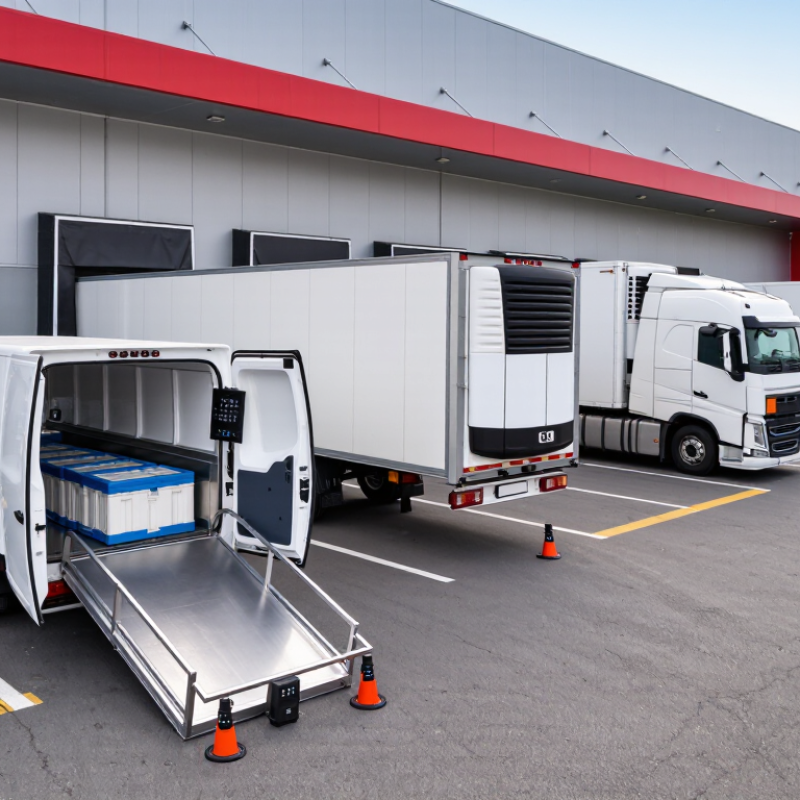
Choosing among the top ten ice cream transport configurations starts with temperature control. Small refrigerated vans suit urban deliveries and narrow streets. Medium rigid trucks support regional routes with multiple stops. Heavy reefer trucks handle larger frozen loads. Insulated containers serve sea, rail, and multimodal transport. Electric refrigerated vehicles can reduce urban noise, but battery range needs careful planning.

For United States shipments, 0°F (-18°C) is a widely used frozen-food benchmark. It should not be treated as a universal FDA rule for every product. Buyers must confirm product specifications, packaging limits, and destination requirements. A calibrated data logger should record temperatures near the cargo, not only beside the cooling unit. Pre-cooling matters. Loading warm cartons into a cold vehicle still creates risk.

ATP requirements may apply to international road transport of temperature-sensitive foods. The vehicle body, insulation, refrigeration unit, and certificate should match the route. Check door seals, drain design, airflow, and cleaning access during inspection. Ice cream needs stable airflow around pallets, with space away from evaporator outlets. Frequent door openings can quickly damage temperature stability. No system is perfect. Real operations include delays, poor loading, and sensor errors. A practical buyer should request test records, maintenance history, emergency procedures, and proof of driver training before purchasing.

Top 10 Ice Cream Transport Vehicles for Global Buyers? - Matching Global Buyer Needs with FDA 0°F, ATP, and Cold-Chain Requirements

Reference planning data for frozen dessert distribution. Actual payload, temperature performance, and certification depend on vehicle configuration, local law, route length, ambient conditions, and loading practices.
Rank Vehicle Type Typical Body / Capacity Recommended Ice Cream Setpoint FDA 0°F Cold-Chain Fit ATP Relevance Best Use Case Key Buyer Considerations
1 Multi-Temperature Refrigerated Semi-Trailer 13.6–16.2 m insulated trailer; approximately 60–90 m³; payload commonly 20–26 metric tonnes. ≤0°F / ≤−18°C for frozen compartment Excellent when pre-cooled and fitted with continuous temperature recording. ATP certificate commonly required for applicable cross-border transport; classification may be FRC or equivalent depending on testing. Long-haul international distribution and mixed frozen/chilled loads. Strong insulation, dual or multi-zone control, bulkhead sealing, fuel or electric refrigeration, and data-logger integration.
2 Single-Temperature Frozen Semi-Trailer 13.6–16.2 m insulated trailer; approximately 60–90 m³; payload commonly 20–26 metric tonnes. 0°F to −10°F / −18°C to −23°C Excellent for dedicated frozen products. ATP certification is generally relevant for international road carriage of frozen food. Full-load factory-to-distribution-center movements. Usually offers the best thermal efficiency for ice cream; verify pull-down time, door-opening recovery, and standby power.
3 Medium Rigid Refrigerated Truck 6–10 m insulated box body; approximately 25–45 m³; payload commonly 4–12 metric tonnes. ≤0°F / ≤−18°C Excellent for regional frozen delivery. ATP may apply to international operations; domestic requirements vary by jurisdiction. Regional wholesalers, supermarkets, and food-service routes. Balance payload against urban access; specify insulated rear doors, strip curtains, and route temperature monitoring.
4 Small Rigid Refrigerated Truck 4–6 m insulated box body; approximately 12–25 m³; payload commonly 1.5–5 metric tonnes. 0°F to −5°F / −18°C to −21°C Very good for short and medium routes with controlled loading. ATP relevance depends on route and national implementation; certificate category should match the body design. City distribution, convenience stores, and smaller retail accounts. Prioritize maneuverability, fast door recovery, compact evaporator design, and sufficient pallet or tote access.
5 Refrigerated Light Commercial Van 6–14 m³ insulated cargo area; payload commonly 0.6–1.5 metric tonnes. ≤0°F / ≤−18°C, subject to verified refrigeration performance Good for short routes; not ideal for extended door-open operations without validation. ATP may not be required for every domestic application; check destination-country rules for cross-border use. Last-mile delivery, small shops, cafés, and sampling programs. Confirm effective insulation thickness, usable internal height, battery or engine capacity, and temperature alarm functions.
6 Refrigerated Box Truck with Tail Lift 6–10 m insulated body; approximately 25–45 m³; payload commonly 4–10 metric tonnes. ≤0°F / ≤−18°C Excellent for palletized frozen deliveries. ATP may be applicable for international transport; tail-lift operation should not compromise door sealing. Retail replenishment where loading docks are limited. Check tail-lift rated capacity, rear-door seal condition, floor insulation, and safe pallet handling in low temperatures.
7 Refrigerated Container Chassis Combination 20 ft or 40 ft refrigerated container on road chassis; internal volume commonly about 28–67 m³. 0°F to −13°F / −18°C to −25°C Excellent for stable intermodal frozen transport. ATP applicability depends on the international road leg, equipment certification, and contracting arrangement. Port-to-warehouse, rail-road intermodal, and export/import distribution. Requires dependable terminal power, genset or clip-on power, reefer telemetry, and strict handoff procedures.
8 Refrigerated Swap Body or Demountable Box Approximately 30–50 m³; payload commonly 8–16 metric tonnes, depending on chassis and body. ≤0°F / ≤−18°C Very good for scheduled regional networks. ATP certification may be required when used for qualifying international refrigerated carriage. Hub-and-spoke distribution with rapid body exchange. Evaluate lifting compatibility, body-floor strength, refrigeration power during transfer, and interchange procedures.
9 Refrigerated Pickup or Utility Truck Approximately 3–8 m³ insulated cargo area; payload commonly 0.5–1.5 metric tonnes. 0°F to −5°F / −18°C to −21°C Suitable for short routes when cargo is pre-frozen and loading time is limited. ATP is usually route- and jurisdiction-dependent; verify eligibility before international use. Direct store delivery, rural routes, and small-volume replenishment. Use insulated curtains or partitions, minimize door openings, and install a calibrated cargo-temperature sensor.
10 Frozen Dessert Delivery Cart or Small Electric Cargo Vehicle Approximately 1–6 m³ insulated compartment; payload commonly 0.2–0.8 metric tonnes. ≤0°F / ≤−18°C, with validated holding time Limited but practical for short urban routes and point-of-sale service. ATP generally depends on the route, vehicle classification, and national rules. Events, campuses, pedestrian zones, and final delivery to small outlets. Validate battery endurance, static holding time, charging access, weather protection, and maximum route duration.
Compliance note: A 0°F / −18°C target is a common frozen-food cold-chain benchmark for ice cream transport. FDA, ATP, and local food-transport rules can differ by product, route, vehicle, and jurisdiction. Buyers should confirm applicable requirements, pre-cooling procedures, continuous temperature records, sanitation controls, and ATP certification status before purchase or cross-border deployment.