How to Choose the Best Livestock Semi Trailer for Your Needs?
Choosing the right Livestock Semi Trailer can be challenging. You must consider various factors, such as load capacity, design, and materials. Expert John Smith, a well-respected figure in the livestock transport industry, states, "Selecting the perfect trailer is crucial for the safety of your animals." This highlights the importance of making an informed decision.
When evaluating options, focus on the specific needs of your livestock. The right trailer should accommodate different species and sizes comfortably. A robust suspension system can reduce stress during transportation. Additionally, ventilation plays a critical role in keeping animals calm and healthy.
Don't underestimate the importance of expert advice. It’s easy to overlook details like weight distribution or legal regulations. However, these factors can significantly impact your transport efficiency. Reflecting on personal experiences can aid in refining your choice.
Understanding Livestock Semi Trailers Types and Features
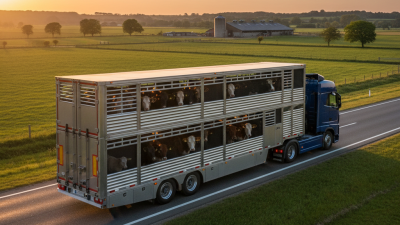
When selecting a livestock semi-trailer, understanding the various types and features is crucial. Different animals require different needs. For example, trailers designed for cattle may need more ventilation and space. Meanwhile, those for smaller livestock like goats or sheep can be narrower. Make sure to consider the specific requirements for the animals you transport.
The construction materials also play a vital role. Steel and aluminum are common choices, each with advantages. Steel is stronger but can be heavier. Aluminum is lighter and corrosion-resistant but might not provide the same durability. Check the floor design too. Slatted floors allow for drainage but can be challenging to clean. Solid floors are easier to maintain but may retain odors. Each option has trade-offs that require careful thought.
Another aspect to reflect on is axle placement. Some trailers feature tandem axles for better weight distribution, while others have a single axle for easier maneuvering. Analyze your transport routes. Short trips may require a different trailer than long hauls. Also, assess your towing vehicle's capacity. Your choice should always align with your operational needs and goals.
Assessing Your Transportation Needs for Livestock
Choosing the right livestock semi trailer requires a clear understanding of your transportation needs. Assess your herd size, types of animals, and typical travel distances. Statistics show that nearly 70% of livestock transportation accidents occur due to improper loading or inadequate trailer design. Each species has specific requirements that must be met to ensure safe transport. For example, cattle need more space than sheep. This means selecting a trailer that accommodates their size is crucial.
Capacity is crucial. A well-designed trailer should maintain an optimal air circulation. According to research, inadequate ventilation can raise stress levels in animals, impacting their health and market value. Temperature control should also be considered. Working with a trailer that has insulation can be beneficial, especially in extreme weather. Furthermore, weigh stations must be factored into your transportation routes to comply with agricultural transport regulations.
Budget constraints are always a concern. With an average livestock semi-trailer costing between $25,000 to $50,000, it’s essential to balance features with your budget. Remember that skimping on quality may lead to long-term costs in animal welfare. Reflect on your choice based on these factors and you may uncover inefficiencies in your current transportation methods that need improvement.
Evaluating Size and Capacity Requirements for Your Trailer
Choosing the right size and capacity for your livestock semi trailer is crucial. It directly impacts the efficiency and safety of transporting animals. Start by assessing the type and number of livestock you plan to transport. This helps in determining the minimum space required. Make sure to consider the dimensions of the animals as well. For example, larger breeds need more space than smaller ones.
After identifying your livestock type, think about the load capacity you need. Each trailer has a specific weight limit. Ensure that it can handle the maximum load combined with the weight of the trailer itself. Miscalculations here could lead to safety issues. Also, consider the distribution of weight throughout the trailer. Uneven loading can affect handling and safety during transit.
Evaluate your transportation routes as well. If you often travel on rough terrain or narrow roads, a smaller or more maneuverable trailer might be better. However, it may not accommodate larger herds. Reflect on the balance between size, capacity, and your specific needs. Sometimes, you'll find that the perfect trailer may not exist, pushing you to compromise on certain requirements.
Identifying Key Safety Features in Livestock Trailers
When selecting a livestock semi trailer, safety features should be a top priority. Proper ventilation systems are crucial. Livestock can suffer from heat stress without adequate airflow. A study by the Animal Welfare Institute suggests that high temperatures can lead to significant health issues in animals during transport. Look for trailers designed with adjustable vents and airflow circulation.
Weight distribution is another key safety factor. An unbalanced load could lead to accidents. Research indicates that improper loading accounts for 20% of trailer-related incidents. Ensure your trailer has features that promote even weight distribution, such as multiple axles or a low center of gravity.
Make sure to inspect the flooring as well. The surface should be non-slip to prevent animals from falling. Many incidents of injury occur during sudden stops. Safety features like reinforced flooring are essential for ensuring stability. Regular maintenance checks are crucial for preserving these features over time. Choose a trailer that allows for easy access to inspect these elements frequently.
Budget Considerations When Choosing a Livestock Semi Trailer
When selecting a livestock semi-trailer, understanding your budget is crucial. Livestock trailers come in various sizes and specifications, which directly impacts their prices. A higher initial cost might mean more durability and better features. Assess what you need most. Do you require extra ventilation for animals? Or is it more important to have a larger load capacity? Prioritize your needs against your financial constraints.
Unexpected expenses can arise in the future. Maintenance costs should not be overlooked. Smaller, older trailers may have lower purchase prices, but they might lead to increased repair bills. Factor in tire replacements and hydraulic system checks. Think about the long-term implications of your choice. A reliable trailer might save you money in the long run, even if it requires a higher investment upfront.
Consider your financing options as well. Will you pay upfront or seek a loan? Each method affects your budget. Budget constraints can influence your vehicle's safety and efficiency. Balancing cost and quality is an ongoing challenge. Reflect on past experiences and seek advice from experts in the industry. Making a well-informed choice can enhance your operations significantly.
How to Choose the Best Livestock Semi Trailer for Your Needs? - Budget Considerations When Choosing a Livestock Semi Trailer
| Trailer Type |
Price Range |
Weight Capacity (lbs) |
Ideal Livestock Type |
Key Features |
| Standard Livestock Trailer |
$25,000 - $45,000 |
10,000 - 25,000 |
Cattle, Pigs |
Ventilation, Rear Ramp |
| Gooseneck Livestock Trailer |
$30,000 - $55,000 |
12,000 - 26,000 |
Sheep, Goats |
Flexible Tongue, Adjustable Axles |
| Bumper Pull Livestock Trailer |
$20,000 - $40,000 |
8,000 - 15,000 |
Miniature Cattle, Poultry |
Easy Towing, Simplified Design |
| Livestock Conversion Trailer |
$35,000 - $65,000 |
15,000 - 30,000 |
Mixed Livestock |
Customizable Layout, Multi-Use Capabilities |
| Drop Deck Livestock Trailer |
$40,000 - $70,000 |
20,000 - 35,000 |
Large Cattle, Hogs |
Lower Deck Height, Excellent Stability |