China Top 10 Bulk Feed Truck Models for Efficient Transportation?
In the rapidly evolving world of agriculture, the role of Bulk Feed Trucks is becoming increasingly vital. Experts like Dr. Emily Chen, a leading figure in agricultural logistics, assert, "Efficient transport of bulk feed is key to maximizing farm productivity." This highlights the importance of selecting the right Bulk Feed Truck models for optimal transportation.
Understanding the top options available can significantly impact efficiency and cost-effectiveness. The right Bulk Feed Truck not only ensures timely deliveries but also helps maintain the quality of feed. Reliable models feature advanced technologies that enhance performance and durability. However, with numerous options out there, choosing the best one can be challenging.
Reflecting on past choices can be beneficial, too. Some models that seemed promising have not lived up to expectations in real-world scenarios. Evaluating what worked and what didn't offers invaluable insights. The landscape of Bulk Feed Trucks is vast, yet it is essential to focus on those that truly deliver results.
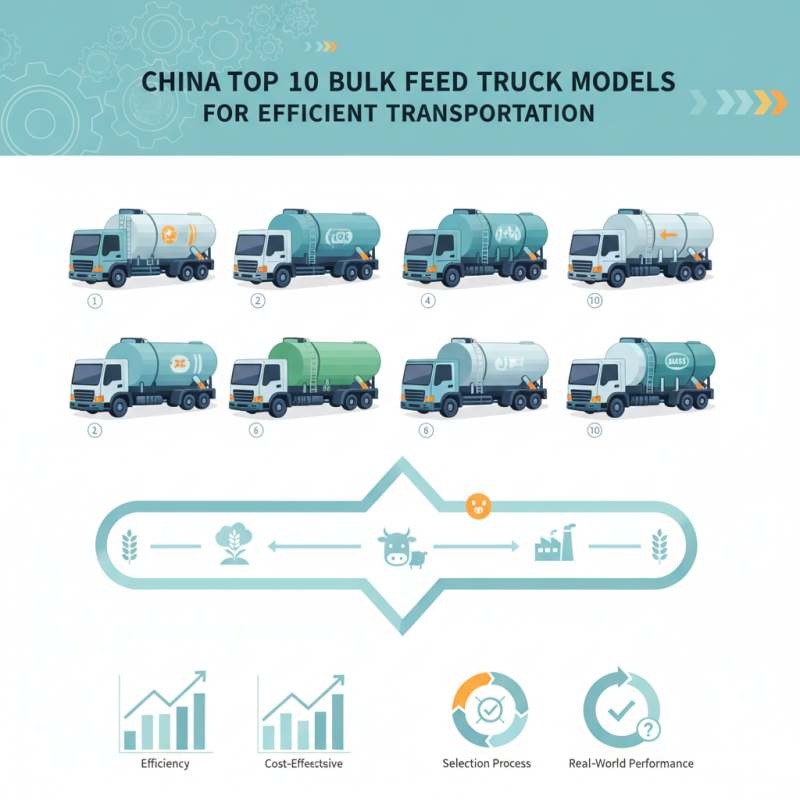
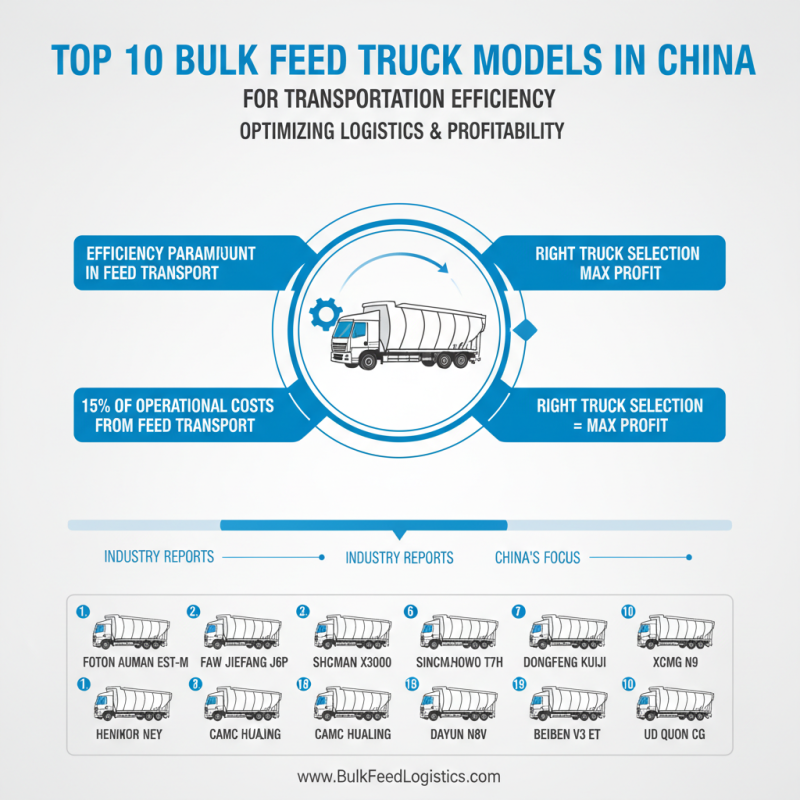
Top 10 Bulk Feed Truck Models in China for Transportation Efficiency
In the landscape of feed transportation, efficiency is paramount. China's bulk feed truck models have increasingly focused on optimizing logistics. According to industry reports, transporting feed accounts for nearly 15% of total operational costs in livestock production. Thus, selecting the right truck is crucial for maximizing profitability.
Among the top models, payload capacity plays a vital role. Many trucks can carry up to 30 tons of bulk feed. This is essential for reducing trips and saving on fuel expenses. The average fuel efficiency of these trucks can vary. Some models exceed a consumption rate of 6 kilometers per liter, which can lead to significant savings over time. Additionally, manufacturers are focusing on advanced loading and unloading systems, aiming to minimize waiting times at loading docks.
However, there is room for improvement in maintenance and service accessibility. Regular checks are necessary to ensure vehicles operate at peak efficiency. Reports indicate that about 20% of downtime results from mechanical issues. Investing in better diagnostics could enhance reliability. Thus, while many trucks meet demands effectively, ongoing adjustments in servicing will be key to ensuring long-term operational efficiency.
Key Features of Leading Bulk Feed Trucks in the Chinese Market
In the competitive landscape of bulk feed transportation in China, key features define the effectiveness of various truck models. A high payload capacity is crucial for maximizing efficiency. Many trucks can carry over 20 tons of feed, significantly reducing the number of trips required. This not only saves time but also lowers fuel costs, enhancing overall productivity in operations.
Another important feature is the design of cargo compartments. Most leading models incorporate smooth, non-stick surfaces. This ensures easy cleaning and minimizes feed wastage during loading and unloading. However, inspection of these compartments is often overlooked, which can lead to potential contamination issues. Regular checks are necessary to maintain hygiene standards.
Safety mechanisms also play a significant role. Trucks are equipped with advanced braking systems and stability controls. Some models include real-time monitoring systems that track the load. Despite these advancements, driver training is often inadequate. This can result in mishaps that diminish the benefits of the technology. Proper training should be emphasized to ensure safety and operational efficiency.
China Top 10 Bulk Feed Truck Models for Efficient Transportation
| Model |
Load Capacity (tons) |
Engine Power (hp) |
Fuel Type |
Average Fuel Consumption (L/100km) |
Key Features |
| Model A |
15 |
300 |
Diesel |
14 |
Advanced suspension system, High-capacity silo |
| Model B |
12 |
250 |
Gasoline |
11 |
Optimized loading design, Enhanced aerodynamics |
| Model C |
20 |
400 |
Diesel |
15 |
Heavy-duty chassis, Spacious interior |
| Model D |
18 |
350 |
Diesel |
12 |
Modern control interface, Smart loading system |
| Model E |
10 |
200 |
Gasoline |
9 |
Compact design, Versatile use |
| Model F |
22 |
450 |
Diesel |
13 |
High loading capacity, Durable frame |
| Model G |
16 |
320 |
Gasoline |
10 |
Enhanced stability, Quick unloading |
| Model H |
14 |
310 |
Diesel |
14 |
Low emission technology, Advanced safety features |
| Model I |
19 |
390 |
Diesel |
12 |
User-friendly dashboard, High-end tires |
| Model J |
21 |
480 |
Diesel |
11 |
Smart technology integration, Long-lasting components |
Comparison of Payload Capacities Among Top Bulk Feed Truck Models
When discussing the transportation of bulk feed in China, payload capacity is crucial. Advanced trucks designed for bulk feed transport have varying capabilities. Some models can carry over 20 tons, while others offer smaller capacities. This discrepancy can impact logistics management significantly.
Efficiency is essential for farmers and distributors. A truck that cannot optimize its load may lead to increased fuel costs and longer delivery times. Many companies are now exploring options to balance payload and fuel efficiency. Balancing these two aspects often proves challenging.
The landscape is diverse. Some trucks excel in payload but lack in fuel efficiency. Others deliver impressive mileage but have lower load capacities. It’s vital for businesses to evaluate their specific needs. Making an informed choice requires careful consideration of both payload and environmental impact. This might be a good opportunity for improvement. An assessment of existing fleets could reveal surprising insights.
Comparison of Payload Capacities Among Top Bulk Feed Truck Models
Fuel Efficiency Analysis of China's Most Popular Bulk Feed Trucks
In recent years, the demand for bulk feed trucks in China has surged. Their efficiency largely hinges on fuel consumption. Understanding fuel efficiency helps operators choose the right model for their logistics needs. Many trucks in the market showcase promising figures, but real-world usage often reveals discrepancies.
One critical aspect is payload versus fuel usage. A truck that carries a heavier load might consume more fuel, yet it can also potentially offset costs through economy of scale. Operators should calculate the total cost of ownership. Sometimes, models marketed as fuel-efficient might have higher maintenance needs, which could surprise users later.
Tips: Regularly check tire pressure. Under-inflated tires can affect fuel efficiency. Choose routes wisely to minimize congestion. A straight path saves time and fuel. Consider training drivers in eco-driving techniques for better fuel management. Small changes in driving habits can make a big difference.
Ultimately, while data on fuel efficiency provides a good starting point, real efficiency often comes from careful analysis of specific operational conditions. Testing multiple models under your unique circumstances can yield the best insights. Select trucks that blend efficiency with reliability for long-term gains.
Regulatory Standards Impacting Bulk Feed Truck Design and Usage in China
In China, regulatory standards play a crucial role in shaping the design and usage of bulk feed trucks. These regulations aim to enhance safety, improve efficiency, and reduce environmental impact. Notably, the Ministry of Agriculture and Rural Affairs has set guidelines that emphasize vehicle stability and payload restrictions. According to a 2021 industry report, compliance can enhance fuel efficiency by up to 15% while lowering operational costs.
Additionally, emissions standards have evolved significantly. New models must meet stricter requirements that limit particulate and nitrogen oxide emissions. This shift responds to growing environmental concerns and public awareness. A recent survey revealed that over 70% of logistics companies prioritize compliance when selecting transportation solutions. However, many companies face challenges understanding and implementing these regulations effectively.
The need for continual adaptation is clear. Truck manufacturers are investing in research to improve designs but often struggle with balancing cost and compliance. Some operators report a lack of clarity in new standards. This can hinder decision-making processes. As the industry evolves, ongoing training and resources will be essential for all stakeholders. Continual collaboration between manufacturers, regulators, and operators can facilitate a smoother transition to compliant and efficient bulk feed transportation.