Essential Tips for Choosing the Best Chicken Transporter Vehicle
Choosing the right Chicken Transporter Vehicle is crucial for poultry farmers. An efficient transporter can significantly reduce stress on chickens during transport. According to the Poultry Transportation Association, over 70% of poultry stress is attributed to poor transport conditions. Selecting the best vehicle is not just about size; it’s about design and functionality.
Expert Paul Henderson, a renowned poultry logistics consultant, emphasizes, "A well-designed Chicken Transporter Vehicle minimizes stress and maximizes safety." His insights underline the importance of proper ventilation and adequate space. Farmers often overlook these details, resulting in losses. Proper insulation and temperature control are also vital. Vehicles should protect against extreme weather.
Farmers may find it tempting to opt for lower-cost solutions. However, this decision can lead to higher mortality rates among transported chickens. Investing in quality transport can pay off. A durable and well-equipped Chicken Transporter Vehicle ensures a healthier flock and better profits. Reflecting on past experiences can guide better choices in the future.

Understanding the Importance of a Suitable Chicken Transporter Vehicle
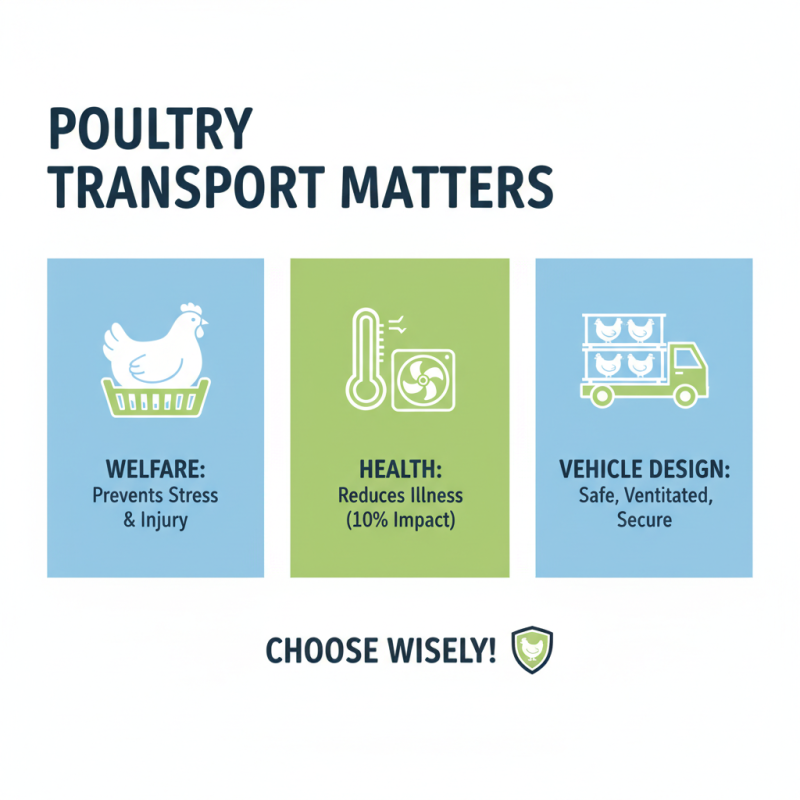
Understanding the importance of a suitable chicken transporter vehicle cannot be overstated. The welfare of the chickens hinges on the vehicle's design and functionality. According to a report by the Animal Welfare Institute, transport conditions affect over 10% of poultry's overall health. Choosing the wrong vehicle can lead to stress, injury, or even death of the birds.
When selecting a transporter, consider the ventilation system. Proper airflow is essential to keep chickens cool and reduce the risk of heat stress. Vehicles should ideally allow for 0.5 square feet of space per chicken to ensure comfort. Inadequate space can lead to overcrowding, which often results in aggressive behavior among the flock.
Tip: Ensure the vehicle has a clean, smooth floor to minimize leg injuries. Additionally, consider the ease of loading and unloading. Complicated designs can stress the birds further during transport. Assessing the vehicle’s capacity is crucial. Too small a vehicle means frequent trips, which heightens transportation costs. Finding the right balance in size is a challenge worth tackling for animal welfare and business sustainability.
Key Features to Look for in a Chicken Transporter Vehicle
When selecting a chicken transporter vehicle, certain features are crucial. The vehicle should have proper ventilation to ensure the birds stay comfortable. Good airflow helps in reducing stress during transport. It’s also important to consider the vehicle’s size. The space must be adequate for the number of chickens being transported. Overcrowding can lead to injuries and stress, which is never ideal.
Another vital aspect is accessibility. The loading and unloading process should be smooth. An easy-to-use ramp can significantly ease this task. Additionally, a sturdy floor is necessary. It should be easy to clean and resistant to wear and tear over time. Proper hygiene can help prevent the spread of diseases among the flock.
Consideration for temperature control is essential too. In hot weather, the interior can heat up quickly, making special modifications beneficial. Reflective materials can help keep the interior cool. Every detail matters when transporting live animals. It’s a complex process that requires constant attention and reflection on methods used.
Types of Chicken Transporter Vehicles: Pros and Cons
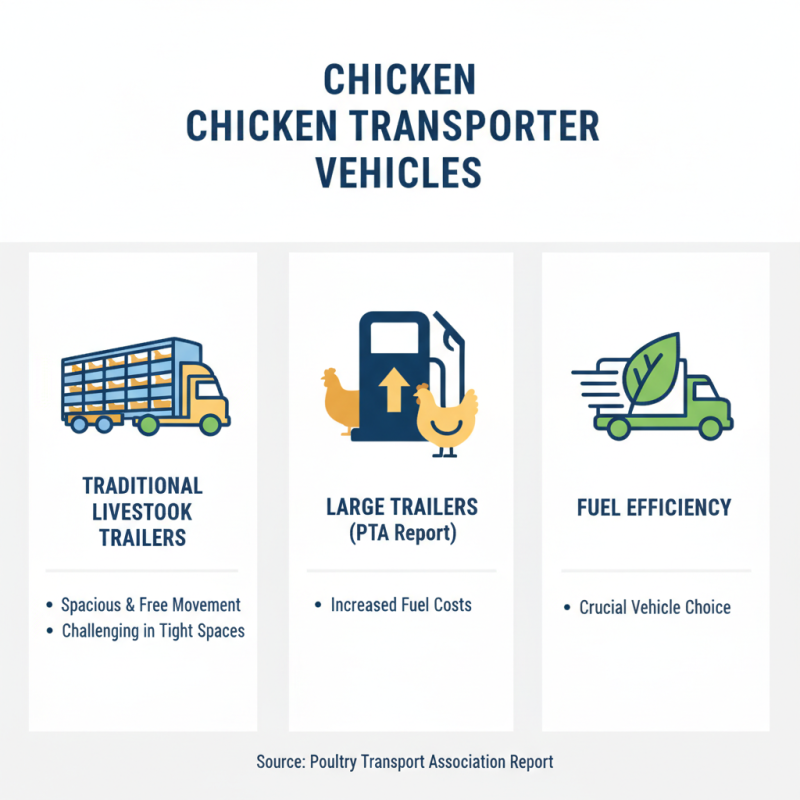
When it comes to transporting chickens, the choice of vehicle is crucial. There are various types of chicken transporter vehicles, each with its own pros and cons. Traditional livestock trailers are spacious, allowing ample movement for the birds. However, these trailers can be challenging to drive in tight spaces. A report from the Poultry Transport Association highlighted that larger trailers often lead to increased fuel costs.
Another option is specialized poultry trucks. These vehicles often have climate control features, ensuring optimal conditions for the chickens. Yet, they usually come at a higher price point and may require more maintenance than simpler models. A 2022 industry report indicated that well-ventilated trucks can reduce stress among chickens, improving overall health during transit.
Here are some quick tips to consider when selecting a chicken transporter vehicle. Assess the size of the flock to determine capacity needs. Always prioritize ventilation and temperature control. Check local regulations on transport conditions to ensure compliance. Think about long-term costs versus initial investment. Each choice carries potential risks that need careful consideration. Planning ahead can prevent regrets later on.
Safety Considerations for Transporting Chickens Effectively
Transporting chickens safely requires careful planning. Start by ensuring the vehicle has proper ventilation. Chickens need fresh air to stay calm. High temperatures can lead to stress or even health issues during transport. Make sure the vehicle is spacious enough. Overcrowding can cause injuries and aggression. An ideal transporter can accommodate their natural behavior.
Consider the floor surface as well. A non-slip surface is essential. It prevents chickens from slipping and getting hurt during transit. Adding bedding material can enhance their comfort. Use straw or wood shavings to create a cozy environment. Be cautious with loading and unloading. Rushing these steps can stress the birds. Take your time, and make sure they feel secure.
Lastly, monitor the transport temperature. Extreme heat or cold can harm chickens. It’s wise to check the weather forecast before setting off. This step may seem trivial, but it significantly affects their welfare. Reflecting on these factors can make a world of difference. A safe journey leads to healthier, happier chickens.
Essential Tips for Choosing the Best Chicken Transporter Vehicle
This chart illustrates the key factors to consider when choosing the best chicken transporter vehicle, highlighting the importance of safety features, vehicle capacity, fuel efficiency, cost, and durability.
Cost Factors and Budgeting for a Chicken Transporter Vehicle
When considering a chicken transporter vehicle, budgeting is vital. The initial cost is often a major concern. However, numerous factors influence the final price. For instance, the size and capacity of the vehicle can drastically change the expense. Larger vehicles often mean a higher initial cost. But they also provide better transportation for more birds.
Maintenance costs are another consideration. A cheap vehicle might save money upfront, but higher repair costs may arise later. Fuel efficiency also plays a role. Opting for a more efficient model can lower long-term fuel expenses. You could save significantly on gas over time.
Finally, think about additional features. Temperature control, ventilation, and safety elements can enhance bird welfare. These features may add to the cost initially, but they can also prevent losses in your flock. Reflect on your needs and calculate potential long-term savings. Each choice affects your bottom line, requiring careful thought.
Essential Tips for Choosing the Best Chicken Transporter Vehicle - Cost Factors and Budgeting for a Chicken Transporter Vehicle
| Transporter Type |
Capacity (Chickens) |
Average Cost ($) |
Fuel Efficiency (MPG) |
Maintenance Cost per Year ($) |
Recommended Usage |
| Van |
200 |
15,000 |
25 |
1,200 |
Short Distance |
| Truck |
600 |
30,000 |
15 |
2,000 |
Long Distance |
| Trailer |
1200 |
50,000 |
10 |
3,500 |
Frequent Farm Transfers |
| Refrigerated Truck |
500 |
40,000 |
12 |
2,500 |
Transporting Day-Old Chicks |