2026 Top Bulk Feed Tipper Innovations and Trends to Watch?
The demand for efficient transportation in the agricultural sector has led to significant innovations in Bulk Feed Tippers. This equipment plays a crucial role in the supply chain, handling a variety of feed types, from grains to pellets. According to industry reports, the bulk feed transportation market is projected to grow at a CAGR of 4.2% from 2022 to 2026. This growth highlights a pressing need for improved technology to enhance efficiency and safety.
As we look ahead to 2026, trends in Bulk Feed Tipper design and functionality are emerging. New materials and custom designs are being developed to maximize payload and minimize wear and tear. For instance, lighter materials can reduce energy consumption during transportation. However, balancing weight and durability remains a challenge. Companies must continually innovate to meet both operational demands and environmental standards.
Monitoring the evolution of Bulk Feed Tippers reveals a broader trend in the agricultural logistics sector. The integration of IoT technology is anticipated, allowing real-time tracking and data collection. While these advancements show promise, there are still areas needing attention, such as optimizing the performance of these systems under varying conditions. The journey for innovation is ongoing, reminding us that every breakthrough has its hurdles.

Emergence of Smart Technology in Bulk Feed Tippers
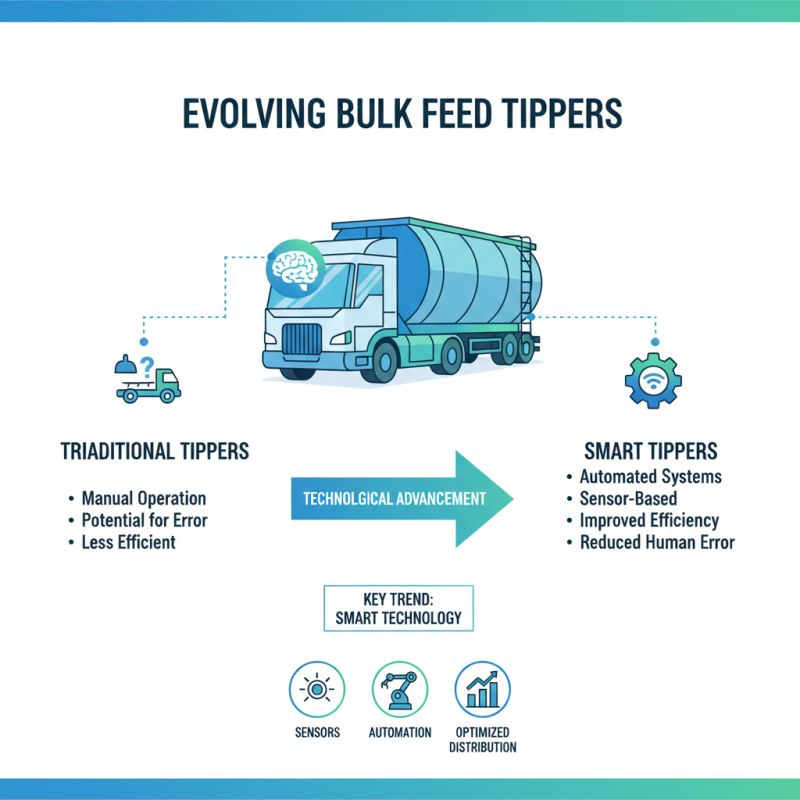
In recent years, bulk feed tippers have undergone significant changes. The emergence of smart technology is one of the most notable trends. Many new models now come equipped with sensors and automation features. These advancements aim to improve efficiency and reduce human error in feed distribution.
Smart tippers can monitor the weight and quality of feed in real-time. They can alert users if there are issues, like blockages. This level of detail helps farmers make informed decisions. However, the reliance on technology raises some concerns. What happens if the system fails? There’s still a learning curve in understanding how to use these features effectively.
Furthermore, not all farms have access to high-speed internet, which is critical for smart tippers. Connectivity issues can limit their effectiveness. As farms strive to adopt these innovations, the question of training personnel becomes crucial. Integrating technology involves time and resources. The pressure to adapt can sometimes overshadow the benefits. Still, the potential for enhanced productivity cannot be ignored.
Advancements in Material Science for Enhanced Durability
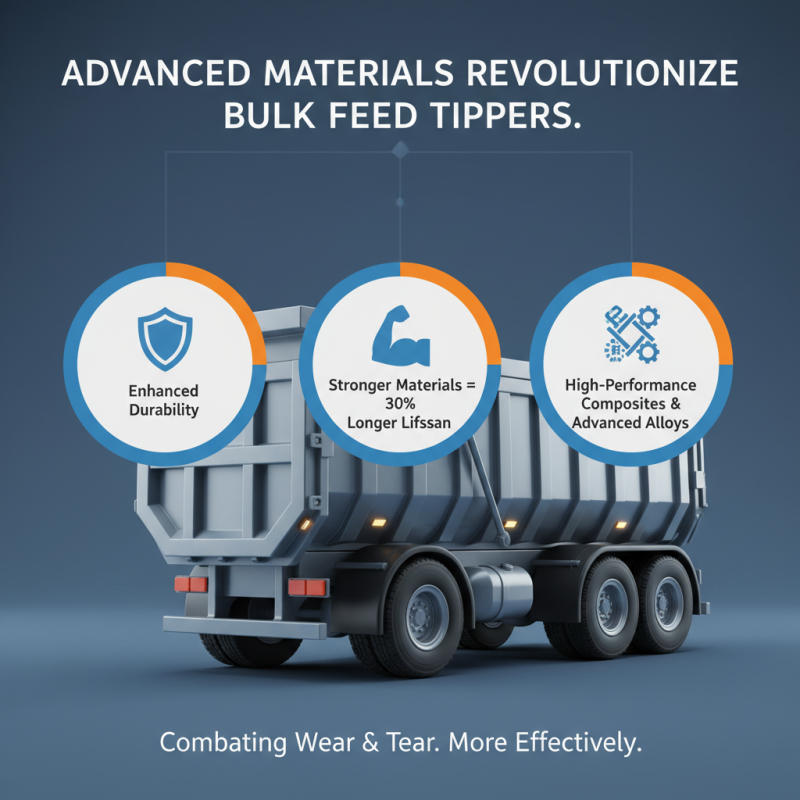
The bulk feed tipper industry is undergoing rapid advancements in material science, focusing on enhanced durability. A recent study indicates that strong materials can improve the lifespan of equipment by up to 30%. Using high-performance composites and advanced alloys, manufacturers are addressing wear and tear more effectively than ever.
New materials can withstand harsh environmental conditions. Extra resistance to corrosion and fatigue is becoming standard. According to industry reports, 40% of failed components result from material degradation. Innovative solutions are now available to extend operational efficiency and reduce replacement costs.
However, not all innovations are perfect. Some new materials still face challenges in terms of cost and processing. Companies must weigh the benefits against potential financial drawbacks. A reported 15% of manufacturers are hesitant to adopt advanced materials. This creates a gap between innovation and market readiness, necessitating more user-friendly solutions. The push for durable and efficient bulk feed tippers is clear, yet there is still room for improvement and reflection in the development process.
Sustainable Practices in Bulk Feed Transport Solutions
Sustainable practices in bulk feed transport are gaining prominence. According to recent industry reports, around 30% of feed-related methane emissions come from transport. This highlights the need for innovation. Adopting greener transport means can significantly reduce these emissions.
Electric-powered trucks are emerging as a viable solution. They can effectively cut fuel costs by up to 40%. Yet, infrastructure remains a challenge. Limited charging stations are a concern in rural areas. This gap could slow progress toward sustainability.
Another focus is on optimizing logistics. Utilizing data analytics can improve route efficiency. Companies report a potential 20% reduction in transport miles through better planning. However, successful implementation requires investment and training. The industry must address these barriers to enhance sustainable practices.
2026 Top Bulk Feed Tipper Innovations and Trends
Trends in Automation and Efficiency for Feed Delivery Systems
Automation is reshaping feed delivery systems in significant ways. Sophisticated sensors and software now monitor inventory levels in real-time. This ensures timely deliveries and reduces waste. Advanced algorithms help optimize routes, making transport more efficient.
Tips: Regularly check your equipment. Maintenance can prevent unforeseen breakdowns. Consider investing in scalable technology. This way, your system can adapt as your needs grow.
Efficiency isn’t just about speed. It's also about accuracy. Automated systems can reduce human error in feed measurement. This benefits both livestock health and your operation's bottom line. However, some producers may find adapting to new technologies challenging.
Tips: Train your staff on new systems. This ensures everyone understands the updates. Evaluate your data regularly for improvement areas. Small adjustments can lead to significant impacts.
The move towards more automated solutions brings exciting trends. However, careful planning is essential. Bridging the gap between traditional methods and new technologies requires a thoughtful approach. Stay informed to navigate this evolving landscape effectively.
Customer-Centric Innovations in Design and Functionality
In the bulk feed industry, customer-centric design is becoming essential. Innovations now focus on enhancing user experience. For instance, intuitive controls simplify operation. Operators can easily adjust settings to fit their needs. This small change creates a significant impact on efficiency.
Another trend is adaptable functionality. New designs allow for easy modifications based on feed types. It helps businesses respond quickly to market demands. Yet, some older models still struggle with this flexibility. This presents a challenge for companies to update their equipment. It’s a chance to rethink and innovate.
Durability remains a key concern too. Customers want equipment that lasts. However, some designs do not hold up under harsh conditions. There are instances of wear and tear leading to unplanned downtimes. Acknowledging these flaws is crucial for future improvements. Overall, focusing on customer needs drives innovation in bulk feed tippers.